
How to Make the Best Beef Stew Ever!
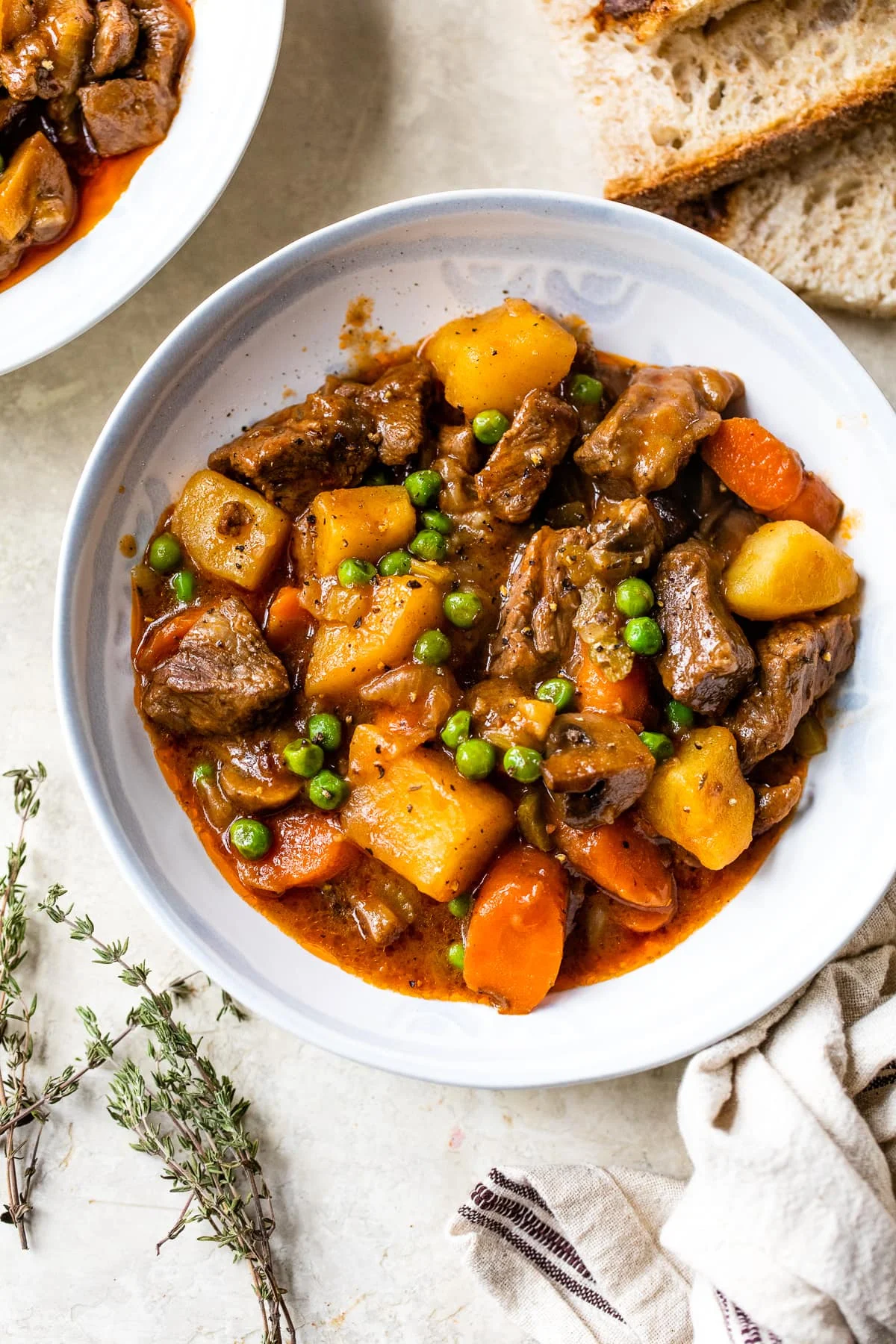
This Classic Beef Stew Recipe is the ideal cozy, comforting meal for colder weather. Made with tender chunks of beef, carrots, potatoes, onion, celery, peas, and mushrooms.
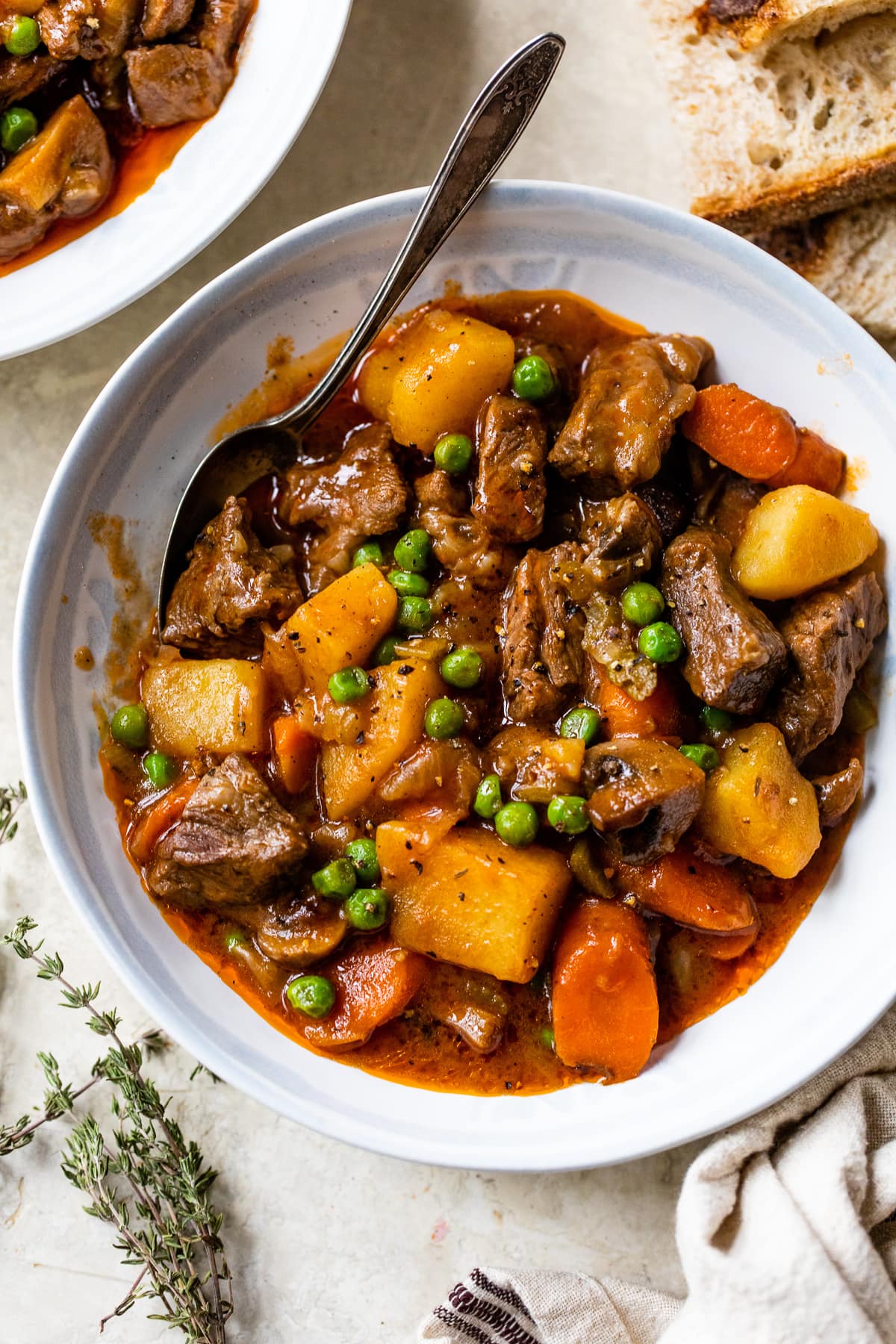
Best Beef Stew Recipe
As the weather cools I crave comfort food meals like a bowl of this traditional beef stew recipe. Made with tender chunks of beef simmered with Yukon gold potatoes, carrots, celery, peas and mushrooms in a richly flavored gravy. I serve beef stew with homemade sourdough bread or cheddar biscuits to sop up any gravy in the bottom of the bowl! I also converted this recipe for the slow cooker after many request, try my Slow Cooker Beef Stew if you’re looking for a crock pot beef stew instead.
Why This Beef Stew Recipe Will Be Your Favorite!
There’s nothing more comforting when the weather gets cold than a bowl of beef stew. This recipe is easy, healthy and delicious!
- Tender, melt-in-your-mouth beef: Chuck roast becomes fork-tender as it slowly simmers.
- Loaded with vegetables: Potatoes, carrots, celery, mushrooms, and peas add plenty of color, nutrients, and hearty texture to every bowl.
- High in protein: Generous portions of beef make this stew satisfying and protein-packed.
- Lighter than traditional beef stew: This recipe skips excess butter and oil while still delivering all the cozy, slow-simmered flavor of classic beef stew.
- The perfect texture: Yukon gold potatoes become creamy while holding their shape, and the flour creates a rich gravy without using heavy cream.
- Great for meal prep: Beef stew tastes even better the next day as the flavors continue to develop, and it reheats beautifully for easy lunches or dinners throughout the week.
Ingredients You’ll Need
Here’s everything you will need to make this homemade beef stew recipe. See recipe card below for exact measurements.

- Beef Broth: To create a flavorful base for this hearty beef stew. Bone broth would also work.
- Flour: All-purpose or gluten-free flour helps thicken the stew for that classic, rich texture—cornstarch works too if you prefer a gluten-free slurry.
- Tomato Paste: To deepen the savory flavor and give this comforting stew a rich, umami kick.
- Salt and Pepper: Season the beef and vegetables with salt and black pepper to bring out the stew’s bold, cozy flavors.
- Beef Stew Meat: Boneless chuck roast is ideal for beef stew—it’s tender and flavorful after slow cooking. Trim and cube about three pounds to yield 2.5 pounds of meat.
- Potatoes: Yukon gold potatoes add a creamy texture that holds up well in stew. Russets or red potatoes also work great.
- Carrots: Fresh carrots add natural sweetness and color to this classic beef stew recipe.
- Celery: Brings subtle flavor and texture to every bite of this one-pot comfort food.
- Onion: Forms the aromatic base for your stew, adding depth to the savory broth.
- Mushrooms: Quartered white mushrooms soak up the stew’s flavor and add earthy richness to this cozy dish.
- Herbs: Fresh thyme and bay leaves infuse the stew with warming, herby notes that complement the beef perfectly.
- Peas: Stir in frozen peas at the end for a pop of color and a touch of sweetness in every spoonful.
How to Make Beef Stew
Here’s the step-by-step instructions to make this cozy beef stew recipe from scratch. See the recipe card below for printable directions.

- Make Sauce: Blend the broth, flour, tomato paste, salt, and pepper in a blender until smooth.
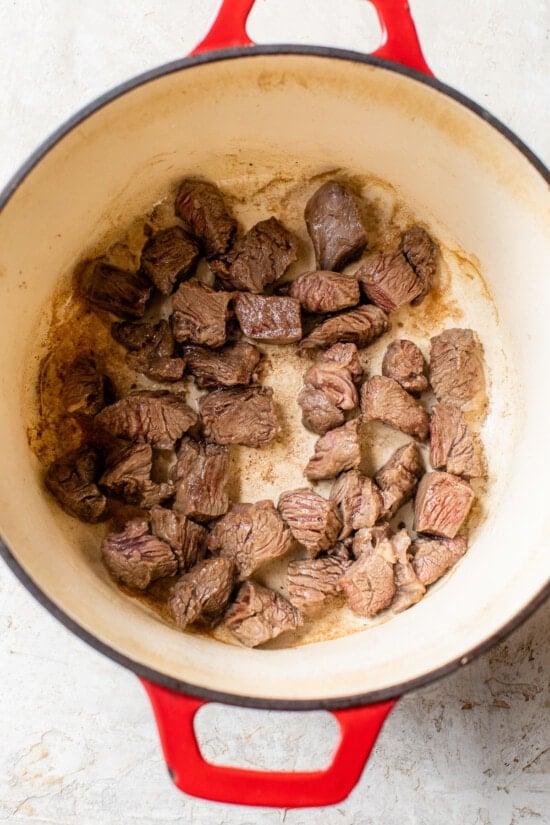
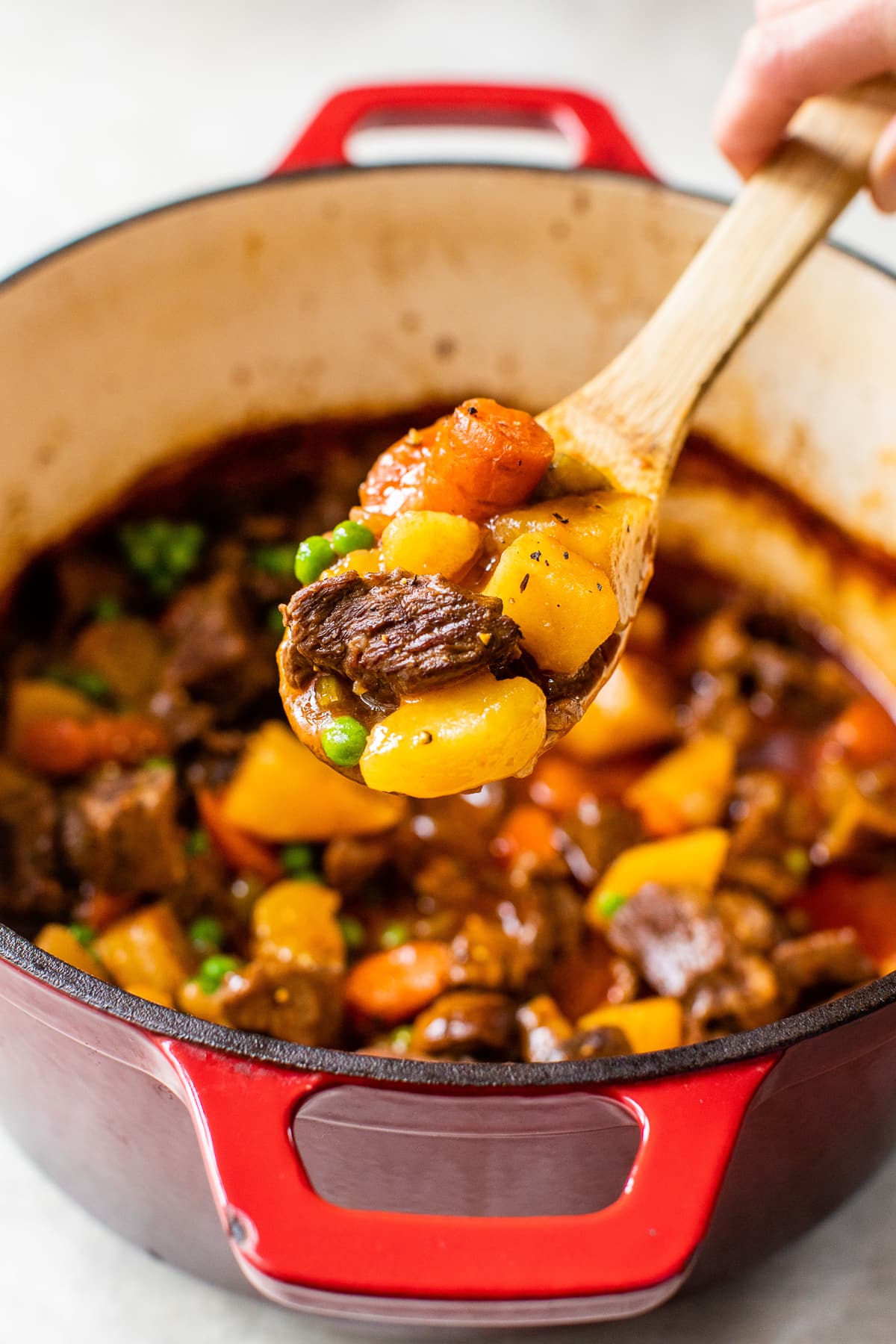
- Brown the Beef: Heat a large Dutch oven over high heat and spray it with oil. Brown the beef on all sides in two batches, then transfer it to a plate.
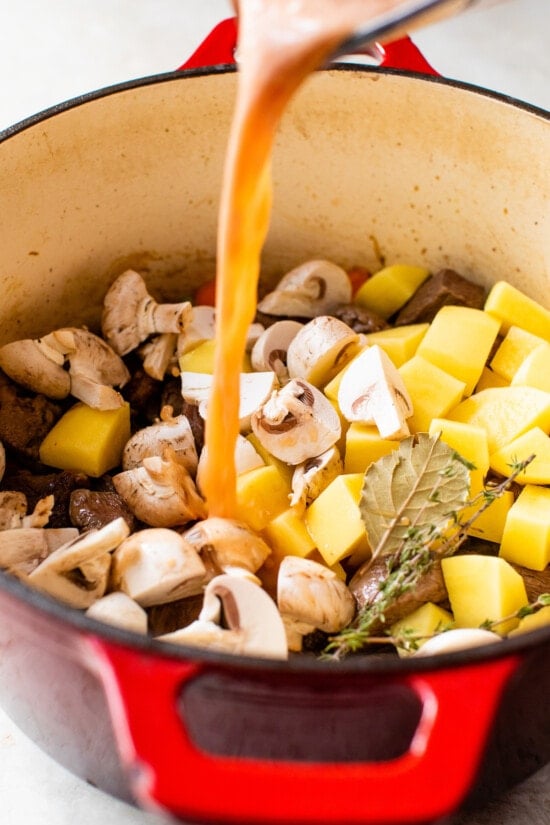
- Cook The Vegetables: Add the carrots, celery, and onion and cook for five minutes. Return the beef and any accumulated juices to the pot. Add the potatoes, mushrooms, thyme, and bay leaves, then pour in the broth mixture.
- Cook Stew: Cover and bake at 375°F for two and a half hours, checking the liquid after two hours. When the beef and vegetables are fork-tender, discard the thyme and bay leaves. Stir in the peas, taste, and add more salt as needed.
Variations
- Slow Cooker: You can make this in the slow cooker with some modifications, see my crockpot beef stew recipe here.
- Different Vegetables: Replace the Yukon gold potatoes with sweet potatoes or parsnips.
- Stovetop: Follow the recipe through the step of adding the broth. Cover and simmer gently on low for 1 1/2 to 2 hours, stirring occasionally, until the beef and vegetables are tender. Add more broth as needed.
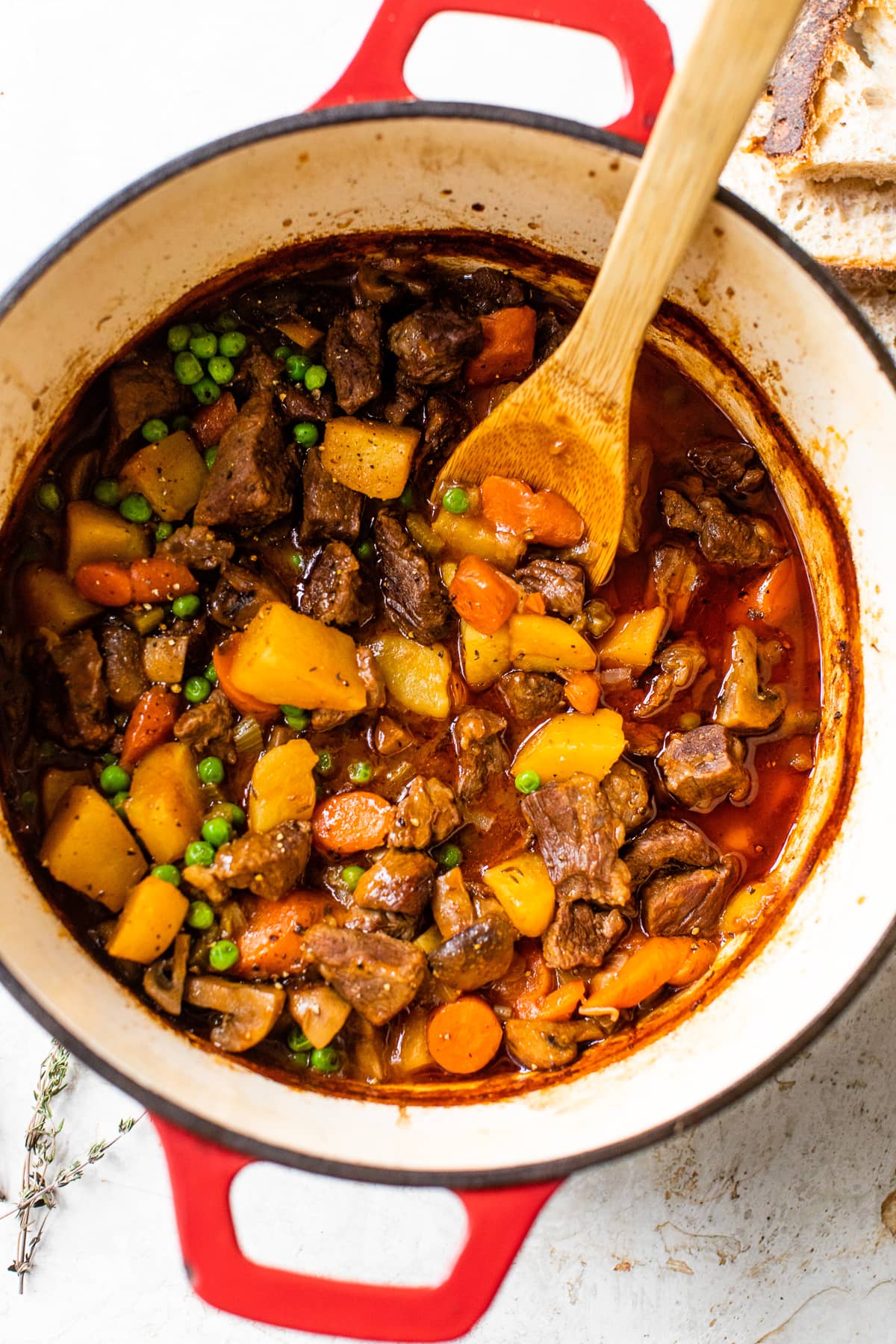
Tips for the Best Beef Stew
- Choose the Right Beef: Chuck roast is my favorite cut for beef stew because its connective tissue breaks down during the long cooking time, making the meat tender and flavorful.
- Brown It in Batches: Crowding the Dutch oven causes the beef to steam instead of brown. Cook it in two batches so the pieces develop a deeply browned exterior.
- Cut Even Pieces: Cut the beef into similarly sized one-inch cubes so they cook at the same rate.
- Cook It Low and Slow: Beef stew needs time for the tough connective tissue to break down. Continue cooking until the beef is easily pierced with a fork.
- Watch the Liquid: Check the stew after two hours and add a little more broth if it looks dry. The liquid should mostly surround the beef without completely covering all the vegetables.
What To Serve With Beef Stew
My homemade Beef stew is a filling meal on its own. If you want to serve it with more sides, here’s some great options:
- Crusty bread to soak up the thick broth
- A simple green salad like this Fall Salad with Pears
- A green veggie, like roasted Brussels sprouts or roasted broccoli
- Cornbread like my homemade cornbread muffins
- Rice, like my foolproof Instant Pot Rice Recipe
Storage and Freezer
Beef stew is excellent for meal prep because the flavor gets even better overnight.
- Refrigerate leftovers in an airtight container for up to four days.
- Freeze cooled stew in freezer-safe containers for up to three months.
- Thaw it overnight in the refrigerator, then reheat it gently on the stove or in the microwave. Add a splash of broth if the gravy becomes too thick.
More Stew Recipes You’ll Love
More beef stew recipes you may also love are this Beef Stew with Pumpkin, Mexican Beef Stew, and my Colombian beef stew, Carne Guisada or try these 5 stew recipes below:
- Beef and Kabocha Squash Stew
- Paprika Chicken Stew
- Slow Cooker Chickpea Sweet Potato Stew
- Slow Cooker Pork and Gandules (Pigeon Peas) Stew
- Chicken and Andouille Sausage Stew
Beef Stew Recipe
WW Points
Ingredients
- 3 cups low-sodium beef broth
- 3 tablespoons all purpose flour , or gluten-free flour
- 3 tablespoons tomato paste
- Kosher salt , and black pepper, to taste
- 2 1/2 pounds boneless chuck roast , trimmed and cut into 1 inch cubes (I prefer Prime, I start with a 3 lb piece before trimming off fat)
- 1 1/2 cups yukon gold potatoes , peeled and diced into 1 inch pieces
- 1 1/2 cups carrots , sliced 1/2 inch thick diagonal, from 3 to 4 medium carrots
- 1 cup celery , chopped, from 3 ribs
- 1 medium onion , cut into 1/2 inch pieces
- 4 ounces white button mushrooms , quartered
- 3 sprigs fresh thyme
- 2 bay leaves , dry
- 1/2 cup frozen peas , thawed
Instructions
-
Preheat oven to 375F.
-
Combine broth, flour, tomato paste, 1 1/4 teaspoons kosher salt and 1/4 teaspoon black pepper in a blender and blend until smooth.
-
Heat a large Dutch oven over high heat, spray with oil and brown the beef on all sides in two batches. Set beef aside, then spray the pot again. Add the carrots, celery and onions and brown, stirring about 5 minutes. Return the beef to the pot with any juices.
-
Add the potatoes, mushrooms, thyme and bay leaves and pour the broth on top. Cover and bake 2 1/2 hours, (check to be sure it has enough liquid after 2 hours) until the meat and vegetables are tender.
-
Remove from oven, discard the thyme and bay leaves, stir in the peas and let them sit 1 minute until heated through. Taste for salt and adjust as needed.
Video
Nutrition
FAQ
If your beef is still tough, it usually needs more time to cook. Continue cooking the stew, covered, and check the meat every 20 to 30 minutes. It is ready when the beef is fork-tender and pulls apart easily. Chuck roast works especially well because its connective tissue softens during slow cooking. Leaner cuts can remain dry and tough even after extended cooking.