
Pesto Pasta Salad (easy & veggie-packed)
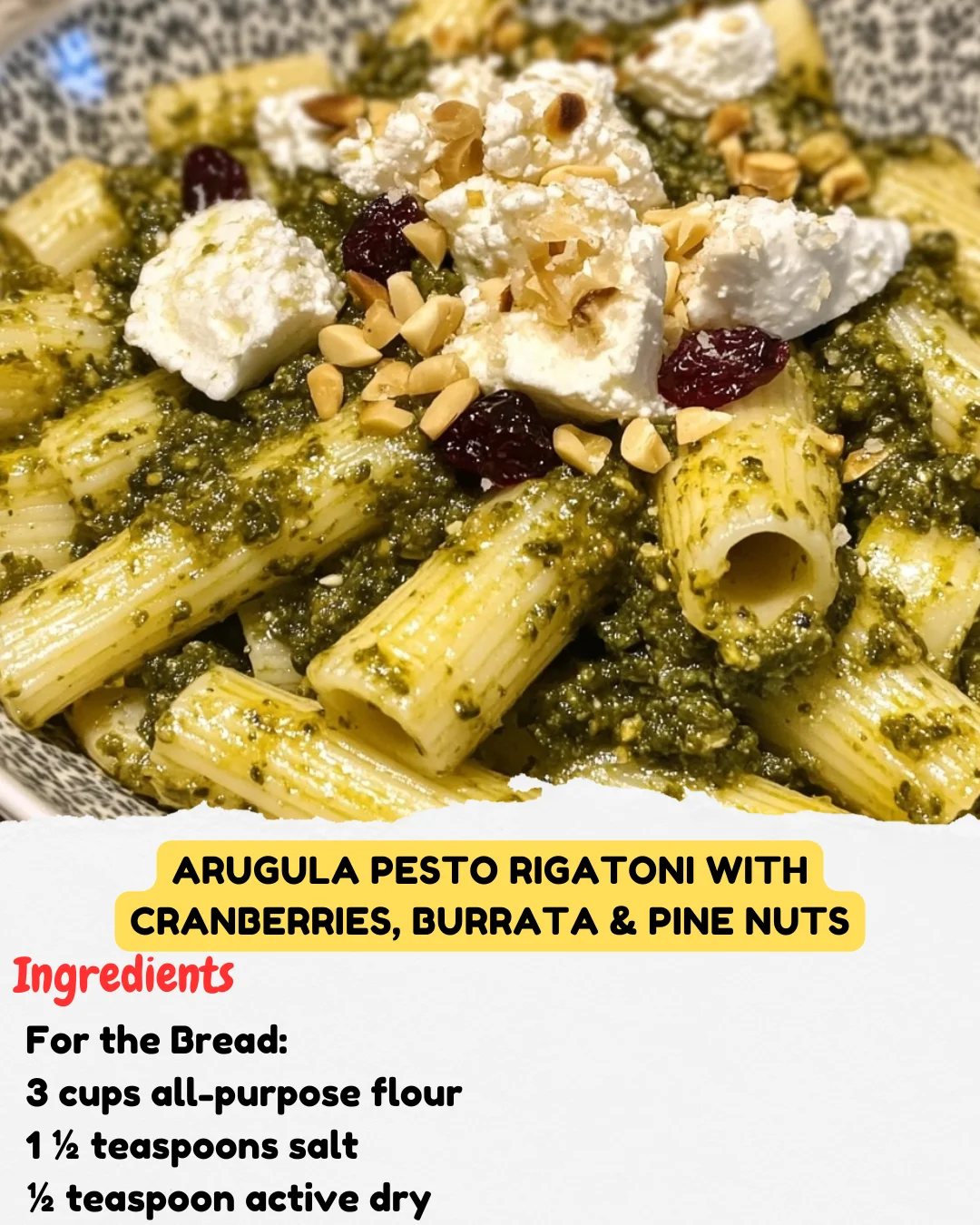
Description
For the Bread:
3 cups all-purpose flour
1 ½ teaspoons salt
½ teaspoon active dry yeast
1 ¼ cups warm water
1 tablespoon honey
¾ cup fresh or dried cranberries
2 tablespoons fresh rosemary, finely chopped
2 tablespoons olive oil (for brushing)
Flaked sea salt, for topping
Directions:
In a large mixing bowl, combine the flour, salt, and yeast. Add the warm water and honey, mixing until fully combined. Stir in the cranberries and rosemary.
Cover the bowl with plastic wrap and let the dough rise at room temperature for 12-18 hours, or until it has doubled in size.
Preheat your oven to 450°F (230°C). Place a Dutch oven or a heavy pot with a lid inside to heat for 30 minutes.
Once the dough has risen, gently shape it into a round loaf on a floured surface and let it rest for 30 minutes while the oven preheats.
Carefully transfer the dough into the preheated Dutch oven, cover with the lid, and bake for 30 minutes.
Remove the lid and bake for an additional 10-15 minutes until golden brown.
Brush the warm bread with olive oil and sprinkle with flaked sea salt for extra flavor.
Allow the bread to cool slightly before slicing and serving.
Prep Time: 10 minutes (plus 12-18 hours rise time)
Cooking Time: 40 minutes
Total Time: 13-19 hours
Kcal: 250 kcal per slice
Servings: 10 slices
Step-by-Step Guide
Follow these detailed instructions for perfect no-knead cranberry rosemary bread. First, in a large bowl, whisk together the flour, salt, and yeast. Ensure the water is warm (about 105-110°F) to properly activate the yeast. Add the water and honey to the dry ingredients, stirring with a wooden spoon until a shaggy, sticky dough forms with no dry flour pockets. Gently fold in the cranberries and rosemary until evenly distributed. This is a wet dough; do not add more flour.
Cover the bowl tightly with plastic wrap. Let it rest in a warm, draft-free spot for the full 12-18 hours. The long fermentation is key for flavor and texture. The dough is ready when it is bubbly, more than doubled in size, and has a slightly domed surface.
When ready to bake, place your Dutch oven (with its lid) into your cold oven. Preheat to 450°F (230°C) for a full 30 minutes. While it heats, turn the risen dough onto a well-floured surface. With floured hands, gently fold the edges of the dough towards the center to form a round, seam-side down. Let this shaped loaf rest on the floured surface, covered loosely with the plastic wrap, for the remaining preheat time.
Using extreme caution, remove the scorching hot Dutch oven. Carefully lower the dough into the pot. Cover with the lid and bake for 30 minutes. The lid creates steam for a crisp crust. Remove the lid and bake for 10-15 more minutes until the loaf is deeply golden brown. An internal temperature of 210°F indicates it’s done.
Serving Suggestions
This artisan bread is incredibly versatile. Serve it warm with high-quality olive oil and balsamic vinegar for dipping. It pairs beautifully with a cheese board featuring creamy brie, sharp cheddar, and walnuts. For a festive twist, use it for gourmet turkey or ham sandwiches. It also makes exceptional toast—top with goat cheese and a drizzle of honey for a perfect breakfast or appetizer.
How-to Summary
Mix flour, salt, yeast, water, and honey. Fold in cranberries and rosemary. Let rise 12-18 hours. Preheat Dutch oven at 450°F for 30 mins. Shape dough and rest. Bake covered for 30 mins, then uncovered for 10-15 mins. Brush with oil and sprinkle with sea salt.
Frequently Asked Questions
Can I use instant yeast instead of active dry? Yes, you can use an equal amount of instant yeast. Simply mix it directly with the flour without needing to activate it in the water first.
My dough didn’t rise much. What went wrong? The most common culprits are old/expired yeast or water that was too hot (which kills yeast) or too cold (which slows activation). Ensure your environment is warm enough.
Can I make this without a Dutch oven? Yes, use any heavy, oven-safe pot with a tight-fitting lid. A deep cast-iron skillet covered with a baking sheet or foil can also work, though steam retention may vary.
How should I store leftovers? Store completely cooled bread in a paper bag for up to 2 days for a crisp crust, or in an airtight container for softer crust. For longer storage, slice and freeze for up to 3 months.
Can I use dried rosemary? Absolutely. Use 1 tablespoon of dried rosemary instead of 2 tablespoons fresh, as dried herbs are more potent.
Common Mistakes to Avoid
Avoid these pitfalls: 1) Over-flouring the dough: The dough should be wet and sticky; adding excess flour creates a dense loaf. 2) Shortening the rise time: The long fermentation develops flavor; don’t rush it. 3) Not preheating the Dutch oven long enough: A full 30-minute preheat is essential for proper oven spring. 4) Cutting the bread while hot: This releases steam and makes the interior gummy. Let it cool for at least 30 minutes.
Conclusion
This no-knead cranberry rosemary bread proves that stunning artisan baking is accessible to anyone. The hands-off method yields a loaf with a crisp, blistered crust and a soft, flavorful interior studded with tart cranberries and aromatic rosemary. By following the detailed guide and avoiding common errors, you’ll achieve bakery-quality results that will impress at any table. Embrace the slow fermentation process—it’s the secret to incredible flavor and texture with minimal effort.